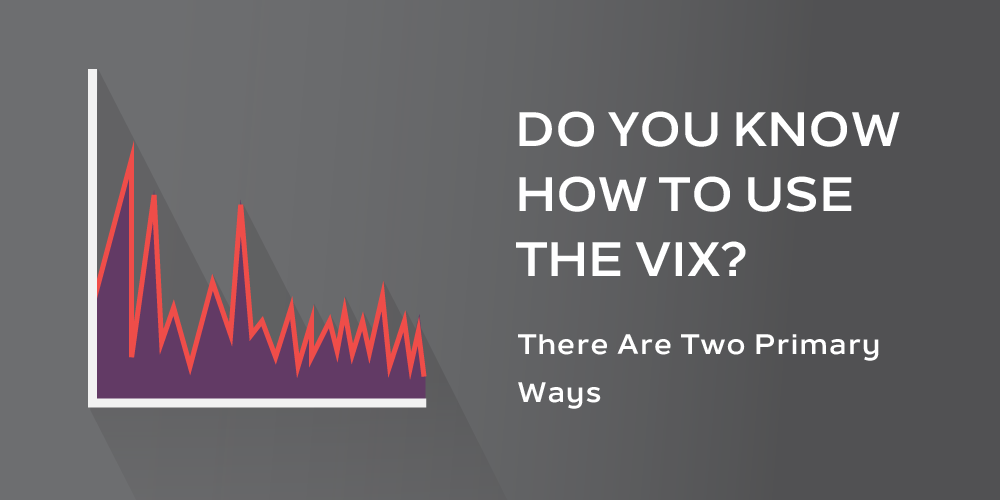
VIX is the ticker symbol for the CBOE volatility gauge. This gauge measures market expectations for near-term volatility by examining implied volatility in a broad group of SP500 index options.
You might be wondering how the VIX is calculated.
The method of calculating the index is beyond the scope of this investing shortcut. WAY BEYOND…
Suffice it to say that it involves many mathematical calculations including square roots, the number of minutes in a year, a weighted average and more. Yuck…
For the average investor, perhaps far more important than how the VIX is calculated is how to use it. Commonly referred to as the “fear gauge,” the VIX may demonstrate extreme risk aversion or investor complacency.
Here are two of the primary ways in which investors can use the VIX:
Portfolio hedging: The VIX may be useful as a vehicle for hedging portfolio risk. When the index is at relatively low levels, markets may be moving higher, and investors may feel that markets will continue to move higher. This investor complacency, however, can often lead to significant turns in the market that can catch investors off guard. Looking at the VIX in recent years, the index has traded largely in a range from about 10 to 30. When the index declines to a relatively low level of 15 or 10, put options are cheap and it could be wise to look to add put protection from a significant market decline.
Market timing: One could also potentially use the VIX for market timing purposes. When equities experience a large decline over a period of time, whether its weeks, months or even years, the fear gauge may be rising. Large spikes may be seen in the index during periods of extreme market distress, and those same periods of extreme market distress can potentially mean the market may be finding a bottom. Markets have a tendency to turn when bullishness or bearishness has reached an extreme. Significantly higher readings in the VIX could potentially be indicative of market capitulation, the time at which the bulls have completely given up and thrown in the towel. These periods of capitulation can potentially represent excellent buying opportunities.
There are now multiple ways to trade the VIX. The index can be traded using futures contracts, options or a number of ETF products based on VIX. With multiple methods for trading, a vast number of strategies may potentially be utilized. Some of the more common strategies that may be used are bull call spreads, bear put spreads, calendar spreads, iron condors and more.
Because the VIX has a tendency to be mean-reverting, numerous mean reversion strategies may also be employed.
The VIX has been mostly range-bound for the last several years, typically moving from 10 to 30. Sudden and powerful spikes may be seen in the index, however, during times of extreme market turmoil and risk aversion. In 2008, for example, the VIX exploded all the way to the mid-90s before eventually declining back to levels seen before the financial crises.