The VIX volatility index is often called the fear index and used to separate stable market situations from sell offs.
The VIX has changed how traders and investors look at angst and uncertainty. It is easy to measure market psychology and compare it to other economic events. High and low are relative terms with higher and lower extremes possible.
Divergence in the VIX can be used to signal a market bottom.
The VIX typically moves higher when the overall market moves lower. This relationship can be watched closely under times of aggressive downward price pressure to determine the fear factor.
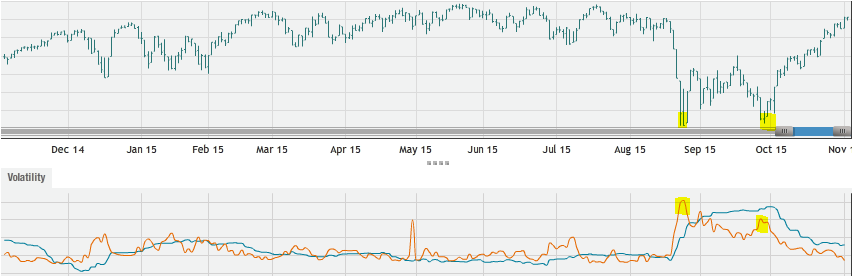
In the example above, the S&P 500 formed a double bottom and volatility exhibited divergence, not making new highs even though prices pushed to lows.
The fear factor on market declines is crucial to measure in relative terms. Less fear is often a bullish sign.